
Hotel Security Tips : What Guests Should Watch Out For Today
5 billion people traveling annually, hotel security has never been more vital. Every guest deserves to feel safe and secure in their accommodations, yet many overlook this important aspect of their stay. When choosing a hotel, security should be a top priority, often overlooked in the excitement of travel. This article will examine key security considerations that travelers should prioritize. You’ll gain practical knowledge on how to assess hotel safety features and ensure a worry-free getaway.
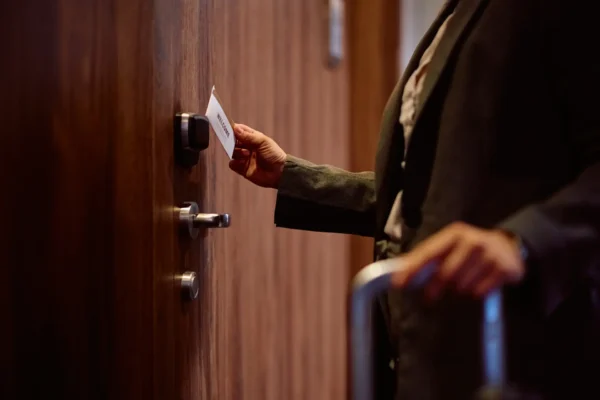
> Understanding Hotel Security Risks:
Two key factors tie for the most important considerations when choosing a hotel with security in mind:
1. The design of the property itself
(and) 2. Location
1. Design: But here’s the thing for the first… …hotels aren’t generally intrinsically designed for security. They are designed for comfort primarily; security probably doesn’t even come in second, (if that). Hotels are not designed with security “in mind.” They are designed with convenience and comfort in mind. The security designs are made after the main structure of the hotel is built. “Hotel security” is often considered a misnomer by security professionals. From concept, a hotel cannot feel anything like a prison. Though the hotels can afford it, they really hate to have cameras in too many places. They don’t want their staff, and particularly not their security personnel “watching” people too closely. Often, many people who are not guests and have no business being at a hotel will roam freely, using the pool, spa, fitness center and other facilities. They can do such completely unchallenged for at least a few days until somebody can “substantially” notice. Because the thing is, who is going to ask them if they are guests? The hotel employees are thinking: “If he is indeed a guest, and I ask him if he is, he may get offended.” Of course, there are ruses that security personnel and management use to determine if someone is a guest, but even such ruses are used with caution not to offend anyone or make anyone feel uncomfortable…

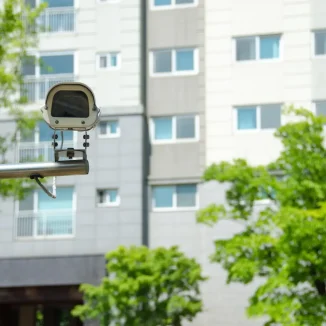
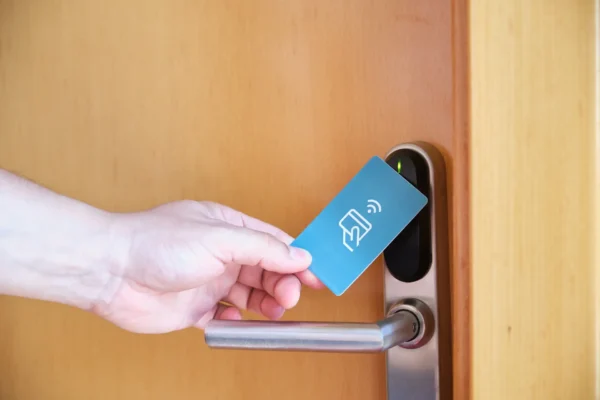
…not much can be done about that, but nonetheless we must consider the design of the property itself; hotels with a single-entry point and well-lit public areas tend to offer better security than sprawling complexes with multiple access points. Additionally, inquire about the technology in place: modern hotels are increasingly adopting smart locks (though such are not as secure as many would think) and mobile check-in options that minimize face-to-face interactions and enhance guest safety. Hotels do not like to install too many cameras as it makes some guests uncomfortable. But they should have some at key areas and parking facilities. If not, that should be considered a negative in the safeguard checkmarks.
You should have an understanding of:
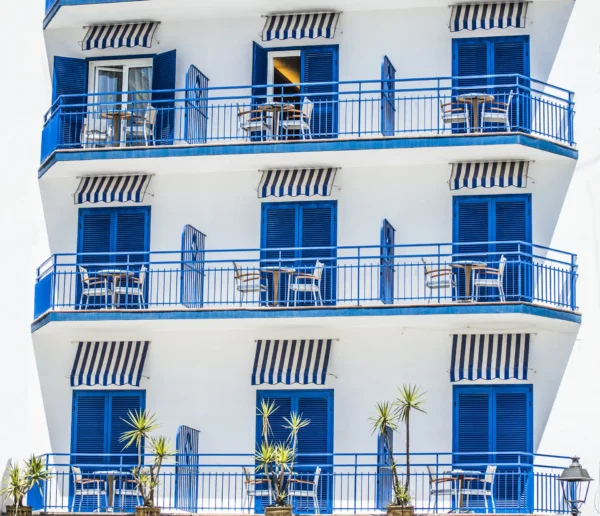
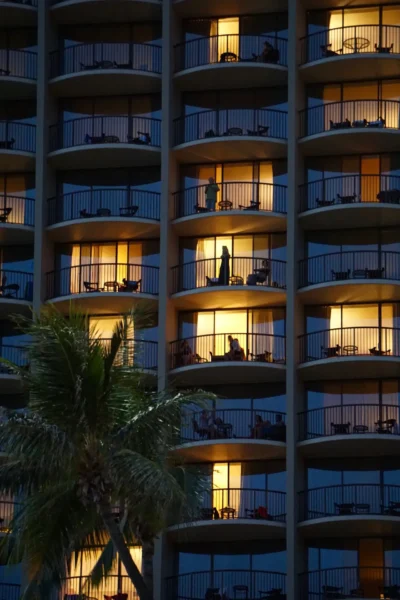
To give you a better perspective of why you should consider just how important balcony design is to your travel safety and security, check out:
2. Location:
One thing that you can almost fully control is the location that you choose. ⇔ Have you ever considered how the location of your hotel could affect your travel safety? Well, if you’re in a “bad side of town” it obviously lends to several disadvantages in the security arena. But there’s more to it than that. Is your hotel in an area that is dominated by tourists? How about foreigners? (and these two titles are not necessarily one and the same)…
DO: Research about the area and specific hotel.
DON’T: Underestimate the power of community; read reviews and seek out recent travelers’ experiences to gauge how the hotel handled security incidents in the past. This insight can also reveal much about a hotel’s commitment to protecting its guests.
You should research:
- Crime rates in the area
- If surrounding neighborhoods are known as being safe
- If travelling internationally, you should note if your spot is a destination of high terrorism risk

3. Vehicle And Pathway Security
The #1 place target for car burglars is hotels. They know people travel with a lot of stuff in their luggage, and many people are tired after a long flight or drive, and therefore do not feel like toting all of their stuff up into their room. Nearly always, even if you can see the burglars breaking into your car, by the time you get down the elevator or stairwell or otherwise out the door, they are gone. Or, if you call the police or even hotel security, they are gone by the time anyone can get to the area of your vehicle. It will never take even amateur car burglars longer than 2 minutes to break into your vehicle, take all they want, and be gone. And that’s long. Professional car burglars will take a maximum of 30 seconds to do all they need to do.
Even if you do not care about any particular items in your car… …for example, Let’s say that you have a bag in your car, and such bag does not have anything in it that you would be concerned about if such were stolen. Well, when burglars look inside your vehicle and see “a bag” they do not know what’s inside the bag, but it could nonetheless entice them. You may not care about your bag being stolen, but the trouble and expense of the broken window or popped lock will provide you with a bad day.
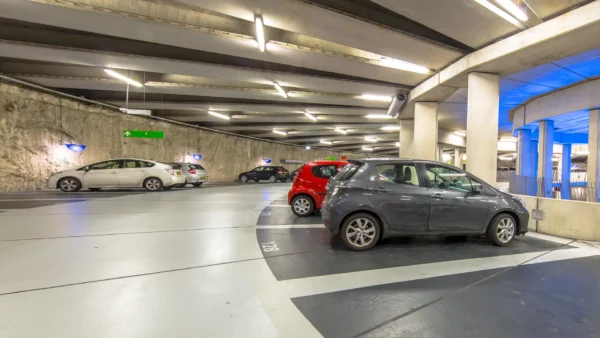
Hotel parking often is overlooked as a security concern. But should not be for several reasons… …is a parking garage like this ideal for hotel safety? It depends on a query of the particular property. And you should also consider the pathway from the parking lot or garage to hotel entry point.
A practical approach to Tactical Parking for security is recommended.
4. Hotel Staff and Security Personnel
Even the finest of hotels generally do not have more than 2-3 security personnel on duty at a time. They can not be everywhere. Your security is always in your own hands.
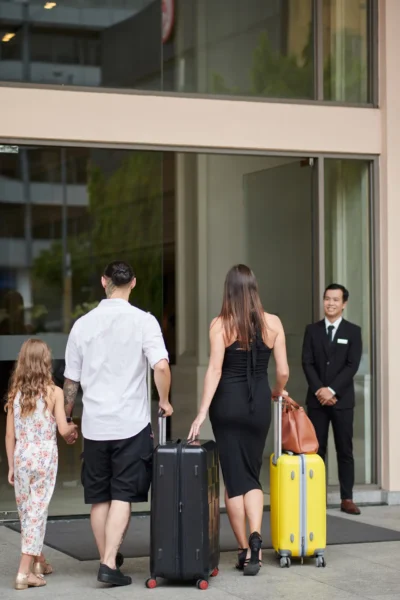
Moreover, in many cases, the “hotel security” is or at least partially also other titles such as “maintenance” or even the MOD (manager) himself. But watchful hotel staff often include the bellman and doormen. And they can be valuable in your security plan.
In order to assess the staff and property itself, ask various hotel personnel about:
- Guest safety protocols
- Local crime awareness
- Room safety
- In-room security features
- Secure luggage storage
5. Other Considerations & Tips:
- Hotel Wi-Fi internet provides one of the greatest opportunities for hackers seeking easy prey. If possible, ask the hotel for wired internet (an Ethernet cable that will plug into a socket and be physically wired to your computer). Though not hack-proof by any means, wired internet is nearly always far more secure than anything wireless. Though using a VPN helps in either case.
- There’s a tip circulating about putting a towel under your room door; there’s some small element of truth to this. It could theoretically help, but more along the lines of disrupting the attempts to manipulate the lock by way of flexible components (and if you saw the link above about one of the ways hotel smart locks can be circumvented, you’ll also appreciate this). Another way it could help is by disrupting attempts from scoundrels to see into your room by use of under door cameras, borescopes, and endoscopes. The ability to see under your door gives criminals various advantages including but not limited to determining if anyone is inside, possible things to steal, and estimating how many people may be inside. Still yet another small way it could potentially help is if a fire is outside, since it is normally recommended to keep smoke from entering from the room from the hallway as most people die from smoke inhalation rather than the fire itself. Cit. ³

- Inspect the room immediately after checking in. Check for signs of tampering with the locks; if your room has a balcony check the back door to see that it is locked, and how well it locks; check all windows.
- Check the peephole and make sure you have an unobstructed view, and then cover the peephole with tape or piece of paper… …why? Because there is such thing as a reverse peephole viewer, and it is easily available and costs less than 50 bucks.
- Reinforce the locks. By now, you should have an idea of how possible it is to bypass hotel door locks. So, consider some ways to reinforce it with extra enforcements. Maybe try these
- Do Not Disturb Sign: Before, many security pros suggested leaving your “Do Not Disturb” sign on your door throughout your stay. However, because of the reaction to the mass shooting at Mandalay Bay in Las Vegas, hotels have applied a new rule in which hotel personnel must inspect every rented room every day. Nonetheless, it is still recommended to leave it up through your entire stay; but don’t rely on any notion that any hotel staff will still not enter your room or knock on your door.
- Leaving Valuables: Well, guess what? That hotel safe in fairly easy to break in to. And when a hotel room is robbed, it is a top target of robbers. Also, another place they look is under mattresses.
- Room Location: In consideration that you want a room where you can see your vehicle (if you bring one and if possible) also consider the floor. The ground floor is too easily accessible to intruders.
You might also be interested in these articles: