
A Tutorial Primer for Civilians
This article was first published April of 2007 by Chad Xon Qua for Advice Watch and was the first content of its particular type directed towards civilians publicly disclosed on the internet.
Most recent update: April 21, 2025
Introduction to Tactical Vehicle Parking
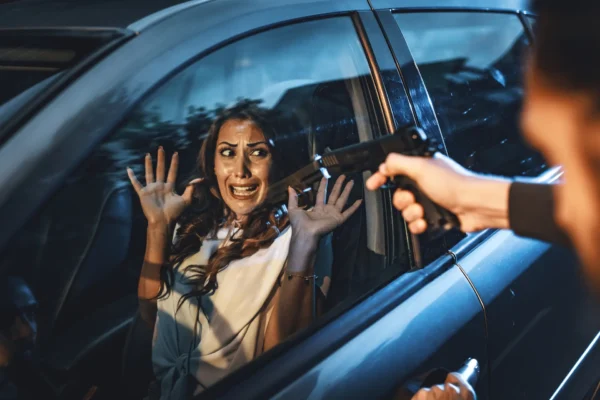
How Tactical Parking Can Save You Time And Reduce Stress
Have you ever parked your car and felt a twinge of anxiety about its safety? -Or- perhaps more importantly, –YOUR- safety? We’re talking about carjacking, mugging and robbery at point of vehicle entry and exit; and vehicle security as related to car theft, vandalism (like keying, denting, and breaking windows), break-ins, gas theft, and inter alia about emergency preparedness for a disorderly and chaotic evacuation. You’re not alone; millions of drivers share this concern as incidents of vehicle theft, vandalism, break-ins, and carjackings continue to soar. Come again, imagine returning to your parked car only to find it missing or damaged—it’s a nightmare scenario that many face each year. With vehicle theft and vandalism on the rise, understanding how to park strategically can make all the difference. By implementing these practical tips, you can protect your investment and ensure peace of mind when leaving your vehicle unattended. In this article, we’ll delve into effective tactical parking methods that regular people can easily adopt to safeguard their vehicles against many security issues such as break-ins and carjackings. By the end, you’ll be armed with practical knowledge to enhance your personal and car’s security and park with confidence.
How to Use Tactical Parking Techniques
Parking Techniques
The essential parking techniques and considerations to build a foundation for cultivated tactical parking skills.
Total Time Needed: 5 minutes
Cost: $0.50 cents (maybe for extra fuel cost for driving around a bit)
Parking Techniques:
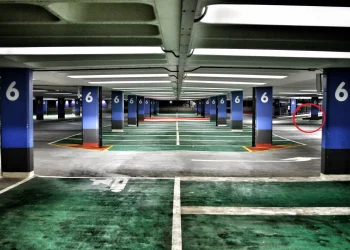
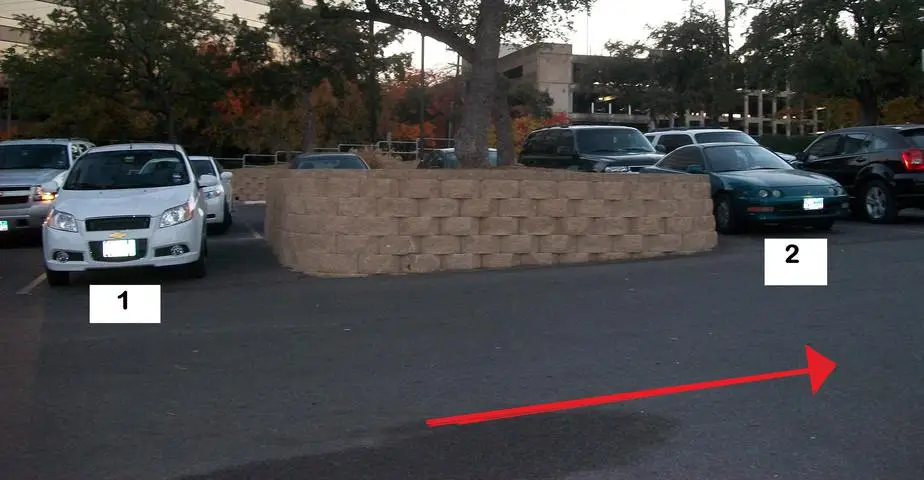
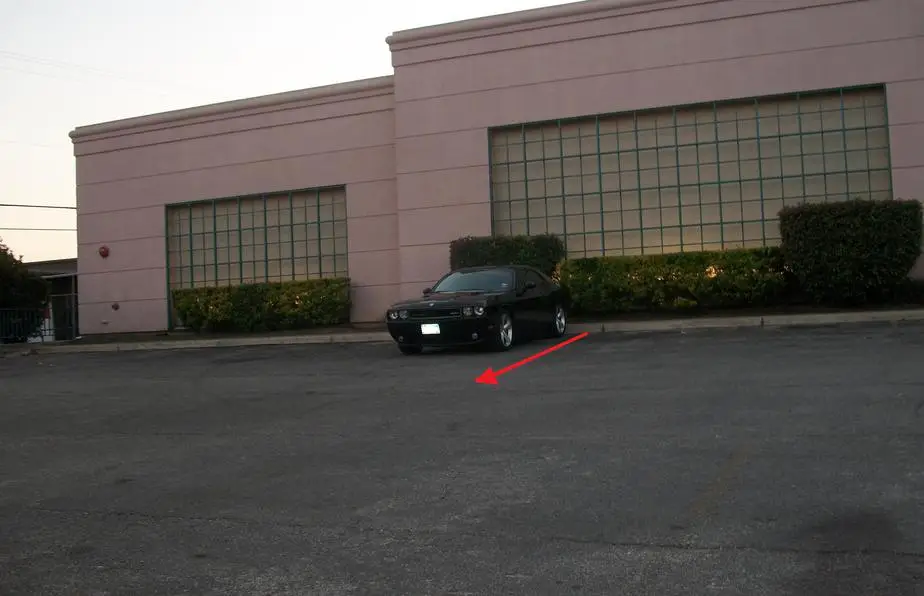
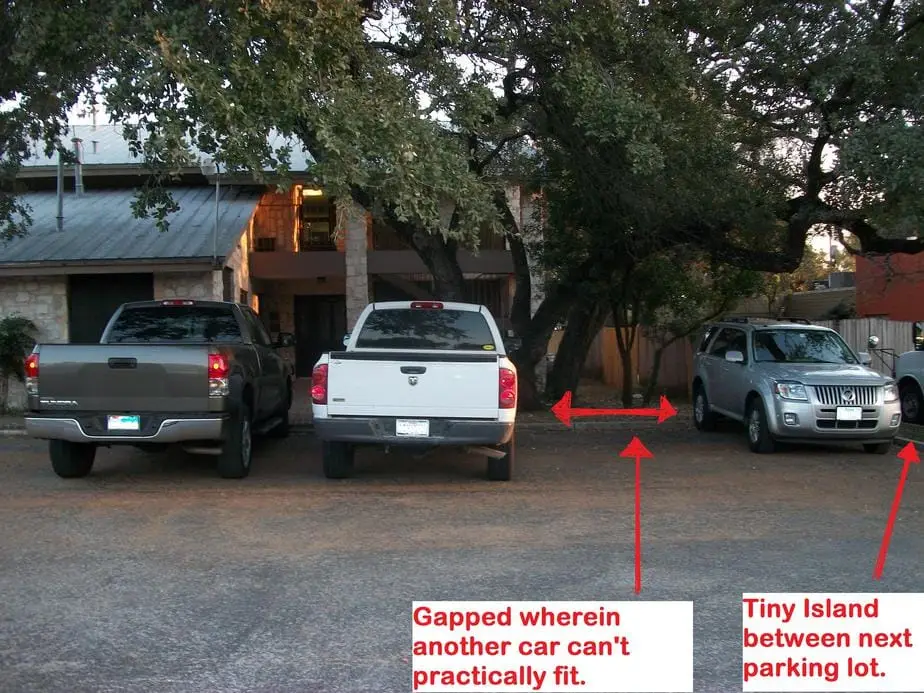
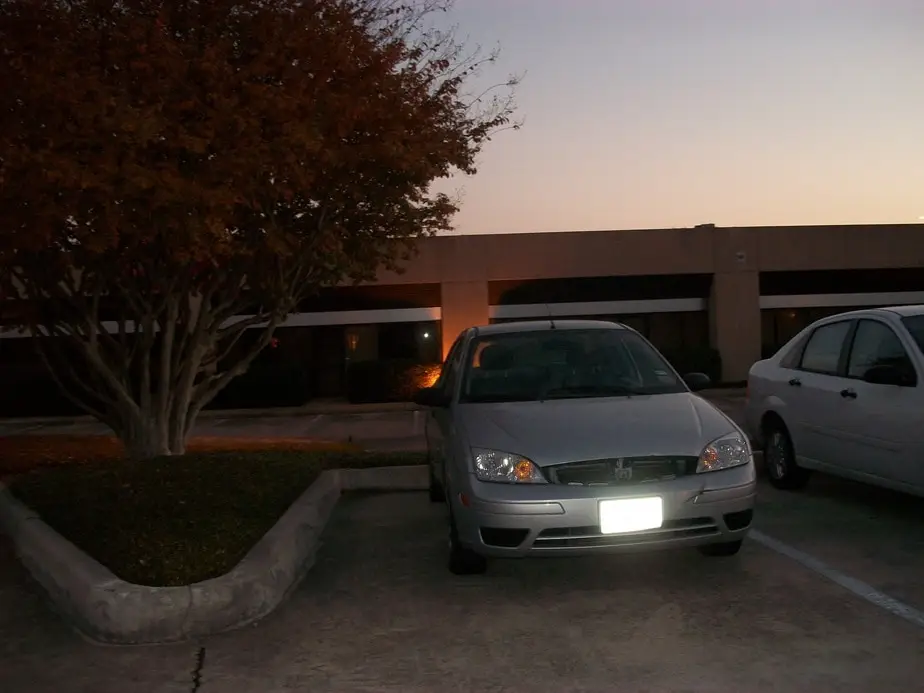
Step 5 : Compare Your Choices If Available

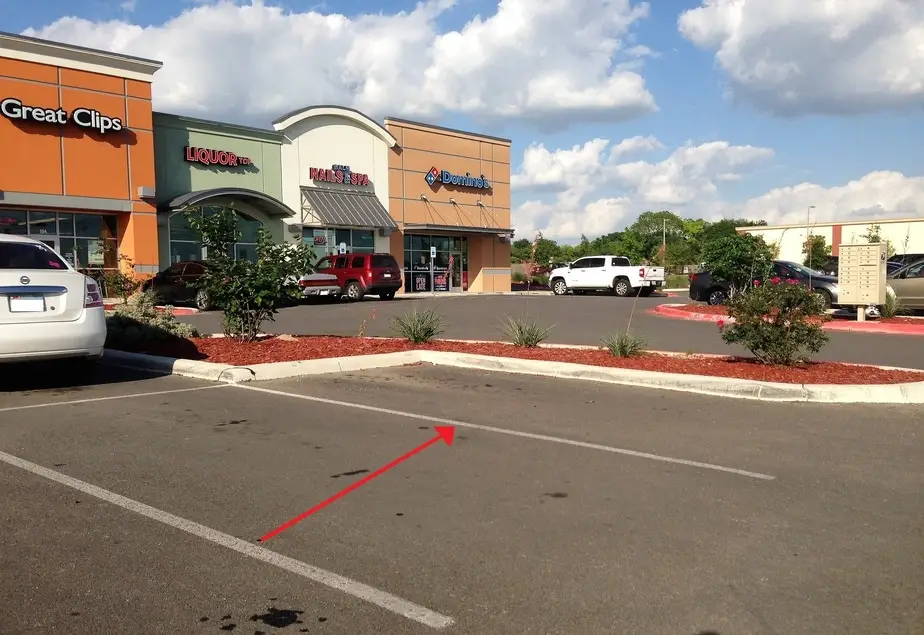
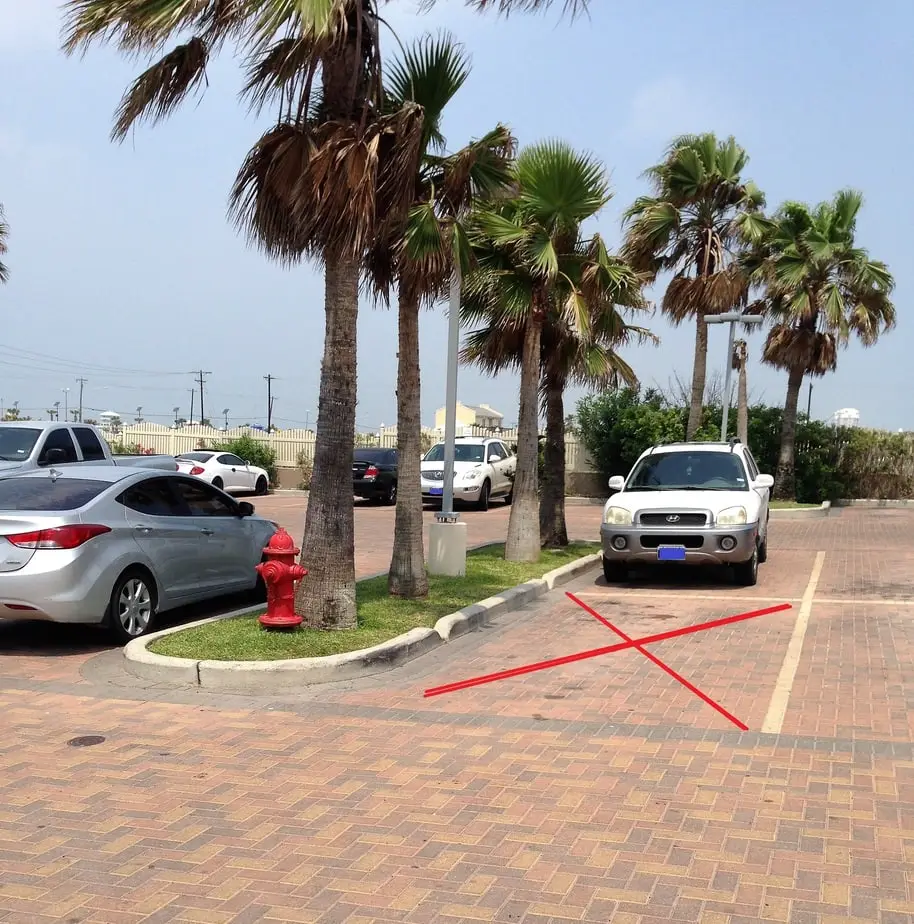
Step 8: Situational Awareness
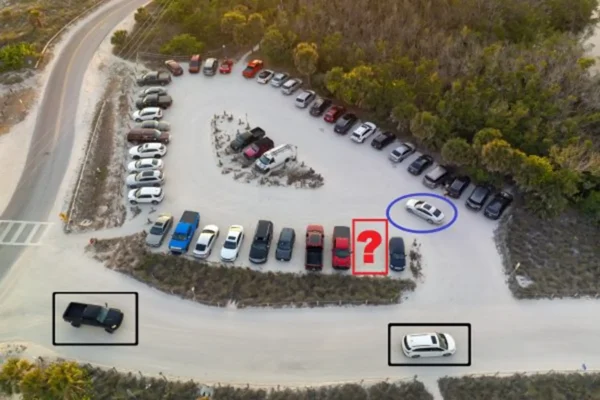
Step 9 : Take Advantage of Obstacles and Obstructions
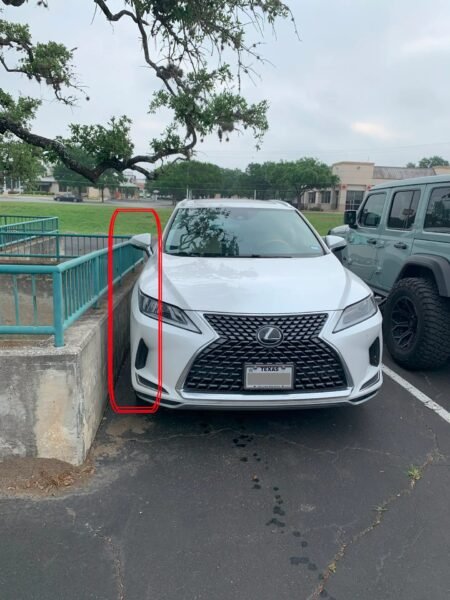
How to Choose a Tactical Parking Space
Parking your vehicle with security and emergency preparedness in mind is strategic and encompasses both an art and a science. By security the reference implied is for considerations of vehicle burglary, vehicle theft, vandalism, and getting in and out of your vehicle with less chance of being robbed or assaulted. Parking for emergency preparedness implies the considerations of a terrorist attack, earthquake, or some other man-made or natural disaster wherein frantic disarray and scrambling can mean a disorderly and chaotic evacuation away from a parking lot.
Parking Considerations:
The good news about parking for both security and emergency preparedness is that many of the techniques and considerations of how and where you park just so happen to be the same. Whether you are parked at home, a busy mall, office lot, or in an apartment complex, many considerations are universal; whereas others are opportunistic and artistic.
First, lets consider how car burglars and car thieves prefer to operate. Though there is nothing set in stone, we know that car burglars and thieves generally prefer to “hit” vehicles wherein the vehicle is facing a direction that they can comfortably see a threat while doing their work. That generally means that the front windshield is facing the home or building wherein the victim or watchful citizens may be inside. For example, vehicle stereo thieves face the front windshield because they face the front dashboard while ripping the stereo from the console, as do vehicle thieves who just plain steal the vehicle itself. The vehicle thieves face the dashboard while doing their work as they break the steering column. If the they can comfortably see out the front windshield if anyone is spotting them, or a threat is approaching them, that is a plus for them… They like it. They do not like to keep having to turn their head around and look behind them, for that also breaks their casual appearance.
Choosing a Tactical Parking Space
How else do they prefer to operate? A common tactic for vehicle burglars is to casually pull their own vehicle along side the intended “hit” target. This gives them many advantages. They can sit in their own vehicle for a few minutes and make sure “the coast is clear” before jumping into your vehicle. And since vehicle burglars commonly work in teams of two, one person can be ready in the get-away car while the other does break-in and theft. They like to be close by the get-away car just in case they get spotted, they can jump in the get-away car and scram. Another advantage of pulling along side the intended hit target is that that they can pretend or have a pretext for being there. For example, they will often pretend to be talking on their cell phone standing between the get-away car and the intended hit, casually looking inside the intended hit for valuables or to examine the possible security obstacles of the hit target.
Thus, from the above we can already formulate a strategy for parking with security in mind. We know that we want our front windshield facing away from our home, building, or store that we are inside while away from our vehicle. So if that means backing in, so be it. That will make it easier for you to pull out of the space when you leave anyways… You can do the work now or later; why not now so you can kill two birds? The backing in or otherwise facing the vehicle away from your home or building or store that you are inside also compliments emergency preparedness. You can pull out faster and smoother in a chaotic situation to get your vehicle away from danger. It is the mark of a security and/or emergency expert to have their vehicle ready to escape in the fastest and most efficient manner.
Further formulating a strategy from the above, we know that if possible, we would want to park in corner parking slots. That is to say we don’t want to be between two vehicles, or have a vehicle parked on either side of our own vehicle. Best is generally to have a slot all to ourselves wherein another vehicle can’t park along side of our own. But since we don’t live in a perfect world, this is seldom possible at a mall, store, or other rather large parking lot. But it is common to be able to find a slot to at least have one side of our vehicle parked so that another vehicle can’t park beside it. These are slots next to islands, shopping basket return holders, or other corner slots. And both vehicle burglars and vehicle thieves generally prefer (if they have a choice), to break in on the driver side. So, this is where the art comes in and it could get tricky… For example, how would you park if you found a corner slot, but yet if you parked with the driver side on the side that another car can’t park beside, that would leave your vehicle with the windshield facing the building that you are going inside…? True, this can’t always be an exact science. We only know what is generally the most idealistic of circumstances for the best parking for security. Again, parking in corner slots is also good for emergency preparedness. It will help you to remember where you parked in a frantic situation wherein your adrenalin is pumping… the flight-or-flight syndrome will take blood and oxygen away from your brain; thus forgetting things that you normally would not is easy. By parking in a corner slot, you also have one less side to worry about too much hitting a pedestrian quickly running to their own car in an emergency situation.
Parking When Gas Prices are High and/or Gas Theft Is of Concern:
Park in areas that have high foot traffic if possible; If gas theft is a top concern, try to park next to islands, medians, empty fields, etc… wherein the side of the gas door is facing such.
If you have multiple vehicles and perhaps get to park one in a safer place than the other/s (Ex. If you have a one car garage), choose the truck or bigger vehicle to park in such safer place. Why?
1. The bigger vehicles are more attractive to gas thieves because they tend to have larger gas tanks, and therefore usually more fuel.
2. Cars are harder to get under than tucks or SUVs; the wheelbase is lower, so gas thieves that drill or cut fuel lines prefer to hit trucks and SUVs, as they are easier to crawl under.
Situational Preparation for Assaults in Parking Lots
7.3 % of all violent crime occurs in parking lots and such are the 3rd most common site of violent crimes in the USA. *Cit. ²
So be prepared!
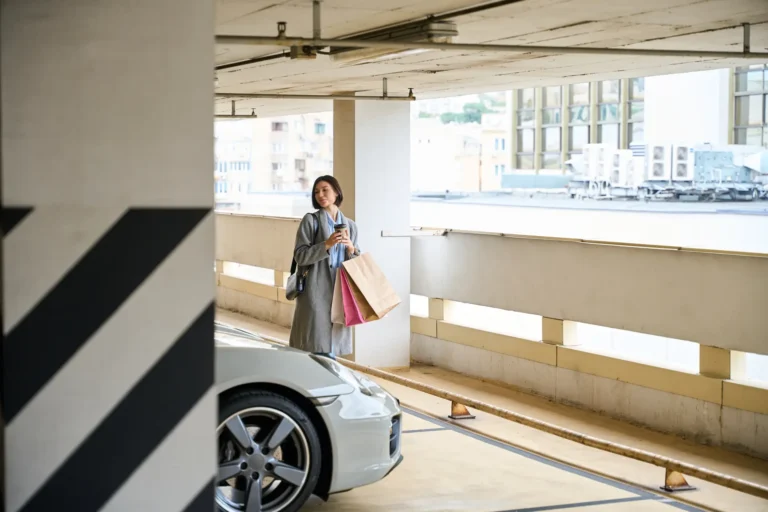
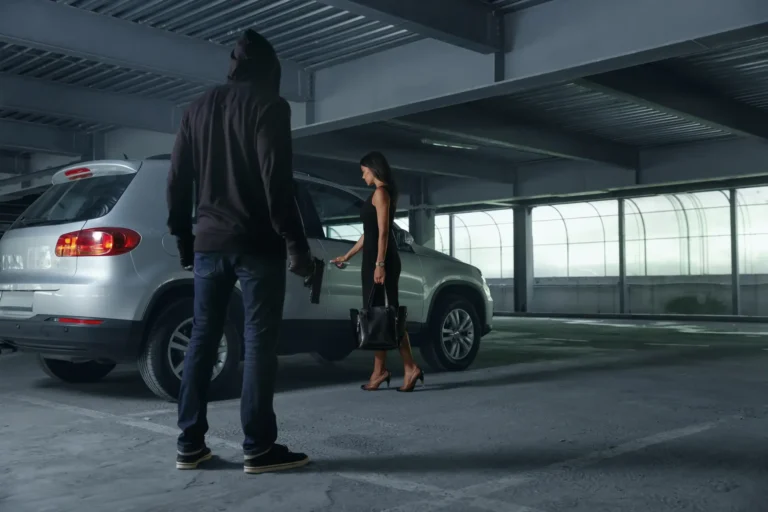
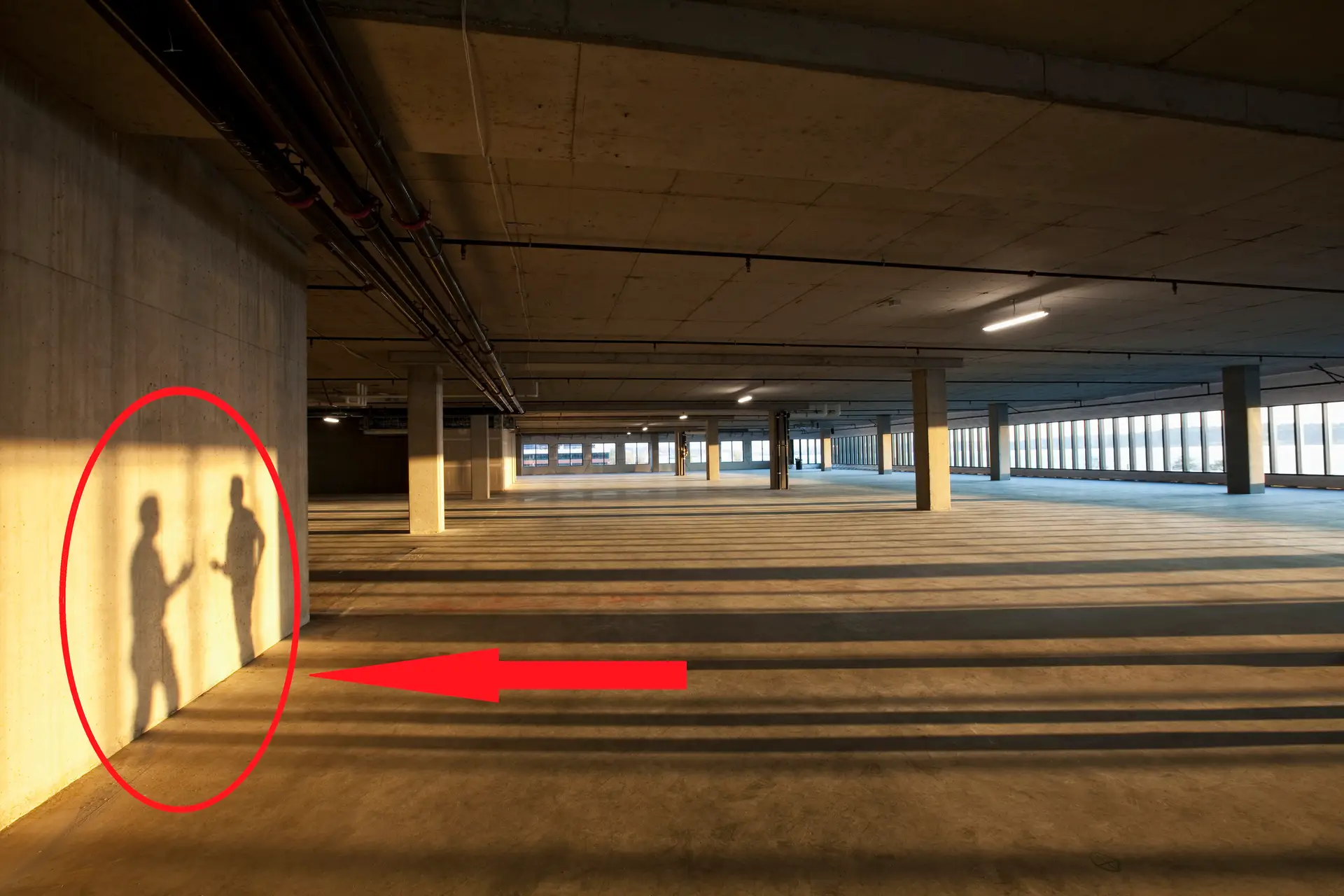
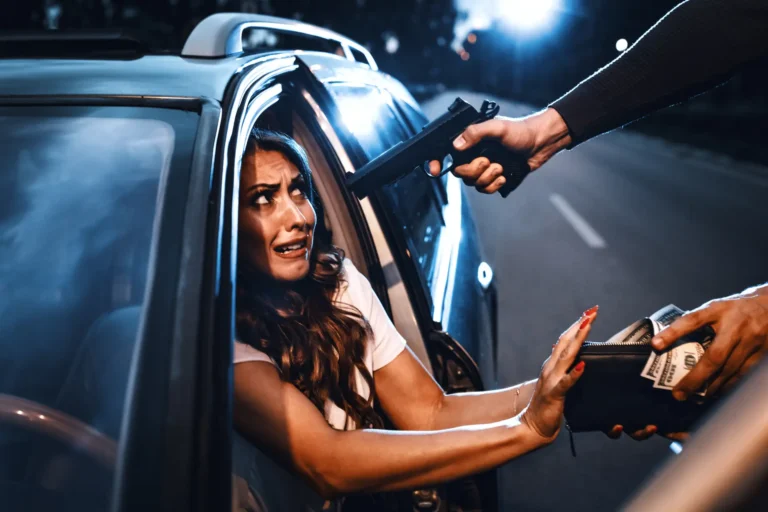
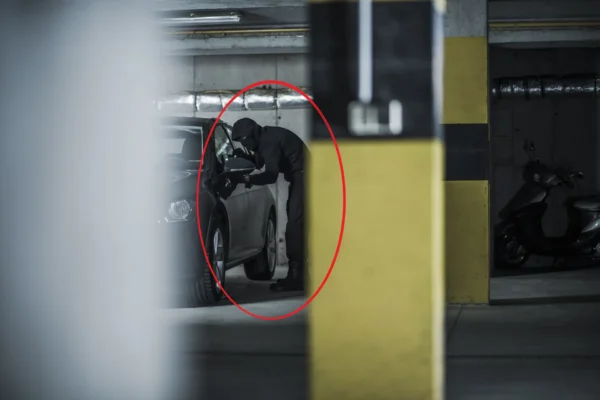
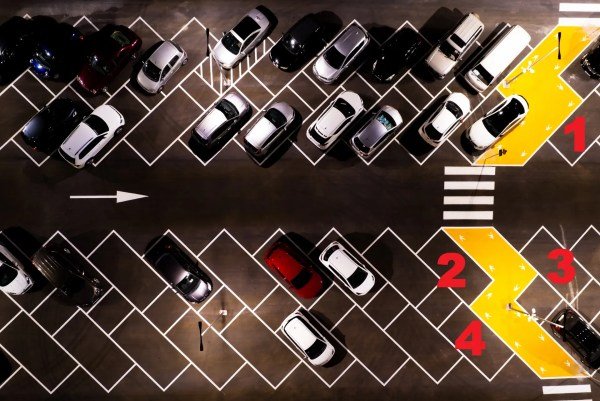
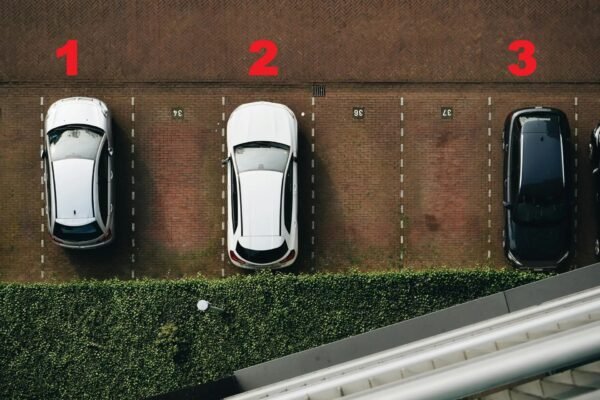
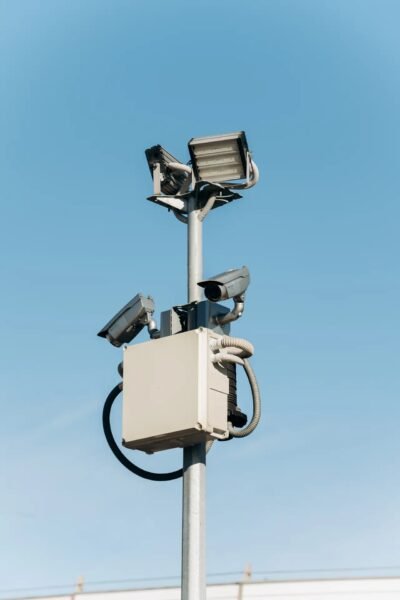
Should you park under lighting and in view of cameras? The general rule of thumb is idealistically yes and yes. Though criminals of today are surprisingly less concerned about cameras than in the past. The second rule of thumb is that if a decision is between better lighting or in view of cameras, the lighting is usually the better option.
Pathways to parking lots and parking garages is crucial in your planning for tactical security parking. It’s also essential to understand that parking in consideration for your return to your vehicle, and that of initial parking are not necessarily in accordance with the same tactic and/or planning.
↓ See if you can determine what might have gone wrong in the following videos… ↓
You might also be interested in these articles: